

In 2019, CCJRC helped pass legislation establishing the Community Crime Victim Services (CCVS) grant program—
a first-of-its-kind investment in community-based support for crime survivors who had been historically and chronically underserved, namely people of color, men, and young adults. CCVS reflects a fundamental shift: survivors are eligible for free support services regardless of whether they reported the crime, when or where the crime occurred, or if they have a criminal record.
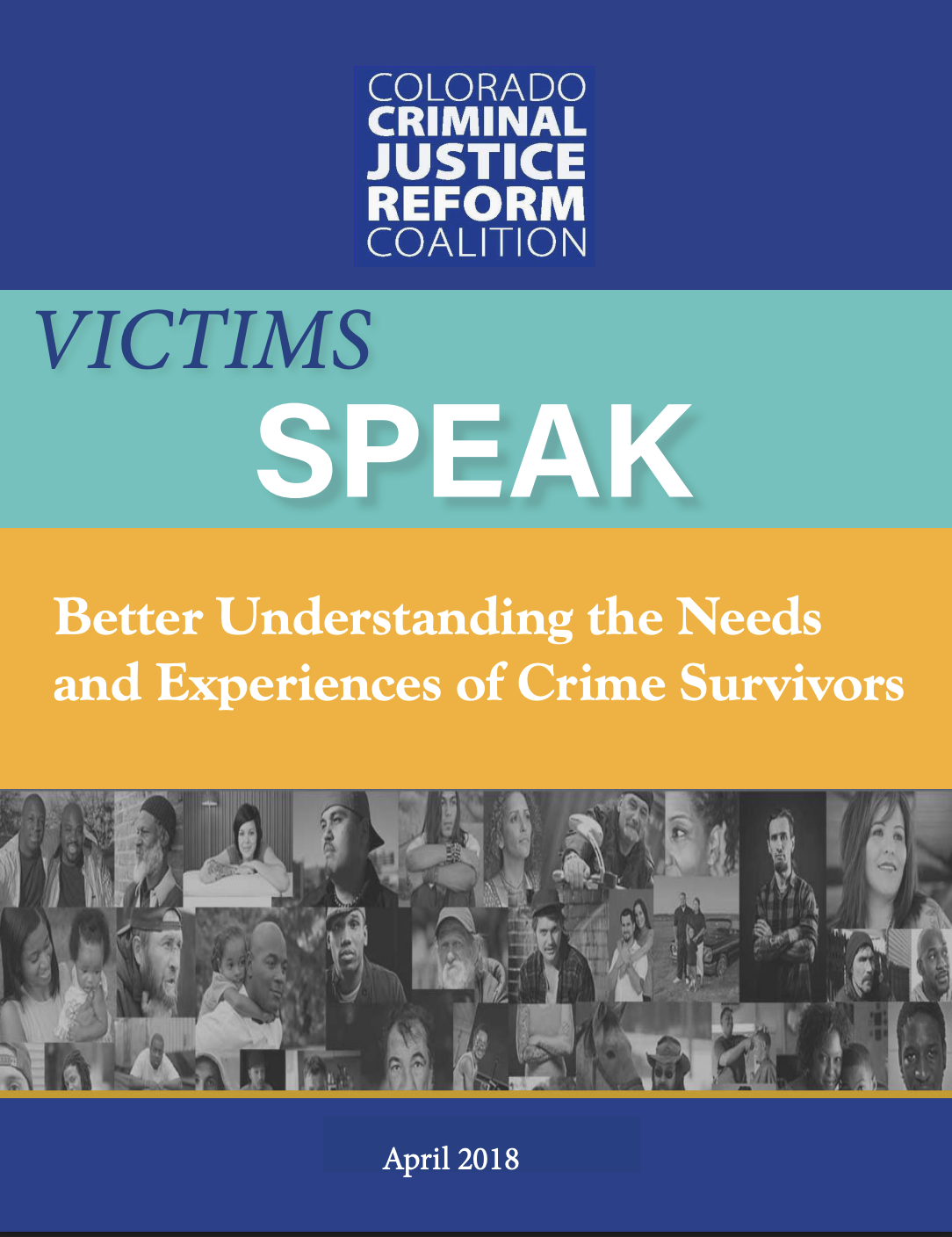
VICTIMS SPEAK
In 2018, CCJRC released Victims Speak, a groundbreaking survey of 500 crime survivors in the Denver metro area, conducted in partnership with Public Policy Polling. The CCVS grant program was designed to respond directly to those findings.
The report surfaced a clear and urgent gap: many survivors — especially men, young people, and people of color — were not being reached by traditional victim services and lacked access to meaningful support in their communities.
WE MUST DO BETTER
In 2021, CCJRC built on this work with a follow-up report We Must Do Better: Victims Services in Colorado Examined from an Equity Perspective, an examination of how Colorado funds and delivers victim services statewide.
It reinforced what survivors had already told us: access to culturally responsive, community-rooted services is limited, uneven, and urgently needed.
The report found that although public funding remained heavily concentrated in criminal justice agencies — not community-based organizations — CCVS has been extremely successful in connecting with and providing services to historically underserved survivors.
HOW IT WORKS
The program directs state funding to trusted, community-based organizations that provide culturally responsive, accessible services outside of the traditional criminal legal system.
Rather than centering prosecution or court involvement, CCVS prioritizes healing, stability, and survivor-defined needs.
CCVS invests in local organizations — many led by people with lived experience — and uses a grantmaking intermediary model to ensure accountability, coordination, and strong outcomes while keeping resources rooted in community.
Through CCVS, funded organizations provide services such as:
Trauma-informed mental health support
Peer support and mentorship
Emergency financial assistance
Housing and basic needs support
Navigation of community resources

YOUR SUPPORT
POWERS OUR WORK
Change only happens when people
like you invest in it.