

Sponsored by a conservative political organization, Prop 132 would significantly increase prison sentences for fentanyl offenses and is projected to substantially increase overdose deaths in Colorado.

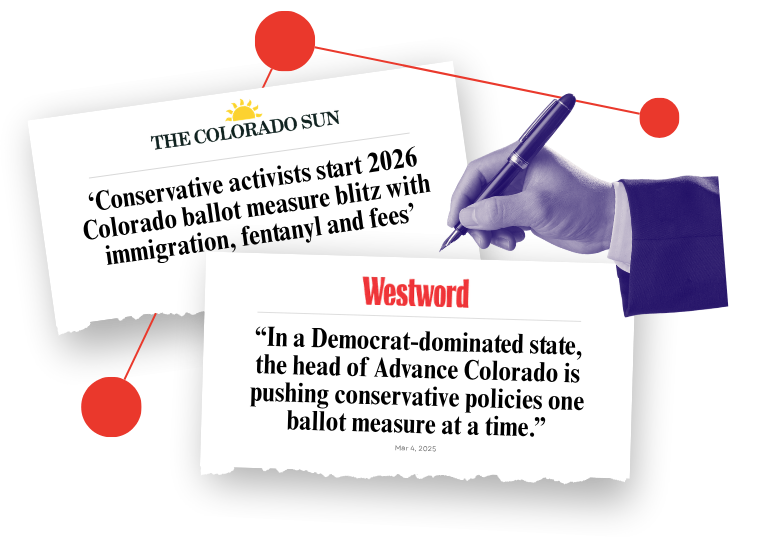
Who is behind Prop 132?
Advance Colorado, a conservative
political organization behind 8 ballot measures on the 2026 General Election ballot.

What would Prop 132 do?
Prop 132 would:
Make any amount of fentanyl possession a felony, even first-time cases.
Punish a person sharing even one pill with the same mandatory 8 to 32-year prison sentence as the highest-level drug trafficker.
Require mandatory sentences even if the person didn’t know fentanyl was present & no money was exchanged.
Send nearly 900 more people to prison each year.
Cost taxpayers $433M in the first 5 years.
Prop 132 would NOT:
WOULD NOT increase penalties for the highest-level drug traffickers.
WOULD NOT reduce drug use or drug sales.² ³ ⁴
WOULD NOT disrupt the drug supply.³
WOULD NOT reduce overdose deaths and is projected to increase them.¹ ² ⁴
WOULD NOT expand access to treatment. Prop 132 provides no funding for the treatment it mandates and could increase wait times at treatment centers.

What are the consequences of Prop 132?


8 to 32-year prison sentences for teens
Right now, 8 to 32-year sentences apply only to the most serious drug trafficking cases. Prop 132 would require at least 8 years in prison — even for minor, first-time cases. Judges would have no choice. An 18-year-old sharing even one pill with a friend would face the same 8 to 32-year prison sentence as the highest-level drug trafficker even if they didn't know fentanyl was present.
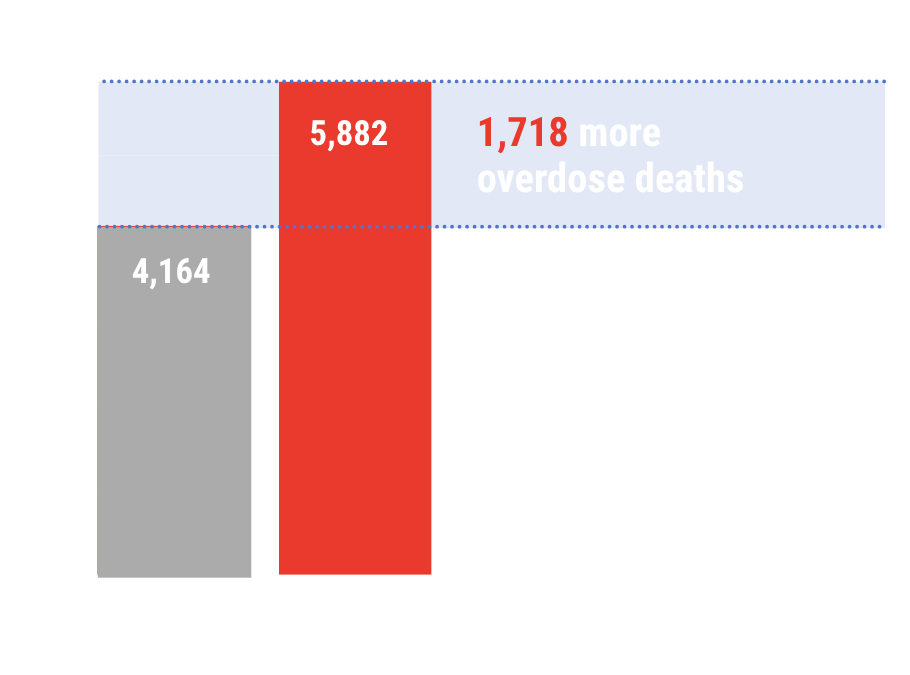
41% increase in overdose deaths
A Colorado-specific scientific analysis conducted by an expert in modeling the relationship between criminal legal policies, treatment access, and overdose outcomes, found that Prop 132 could result in 1,718 additional overdose deaths over five years — a 41.3% increase compared with current Colorado law.
How much will Prop 132 cost Coloradans?
$433,000,000
Nonpartisan legislative council⁴ prepared a cost estimate and found that Prop 132 would increase the prison population by nearly 900 people/year and require major prison expansion because the current system cannot handle the growth.
Building one new prison cell costs about $413,000.⁵ Keeping one person in prison costs about $68,000 per year.⁶ 900 x ($413k + $68k) = $433 million over the next 5 years.
900
MORE COLORADANS IN PRISON/YEAR
$413,000
FOR EACH NEW PRISON CELL
$68,000
FOR EACH PERSON IN PRISON/YEAR

How would the state pay for the added costs of Prop 132?
Prop 132 increases prison costs and requires treatment in some cases but provides no funding to pay for either. Colorado must balance its budget under the state Constitution.

To pay for Prop 132, Colorado must raise taxes and fees, or cut funding from other priorities, like K–12 schools, higher ed, or healthcare.

“Research consistently shows that neither increased arrests nor increased severity of criminal punishment for drug law violations result in lower levels of either drug sales or drug use. Rather, the behavior that is likely to be deterred is the life-saving seeking of medical assistance by those who are present at an overdose."
— Dr. Leo Beletsky
Professor of Law & Health Sciences at Northeastern University; faculty of the University of California at San Diego School of Medicine; interdisciplinary social epidemiologist who explores the role of law and law enforcement as structural determinants of health

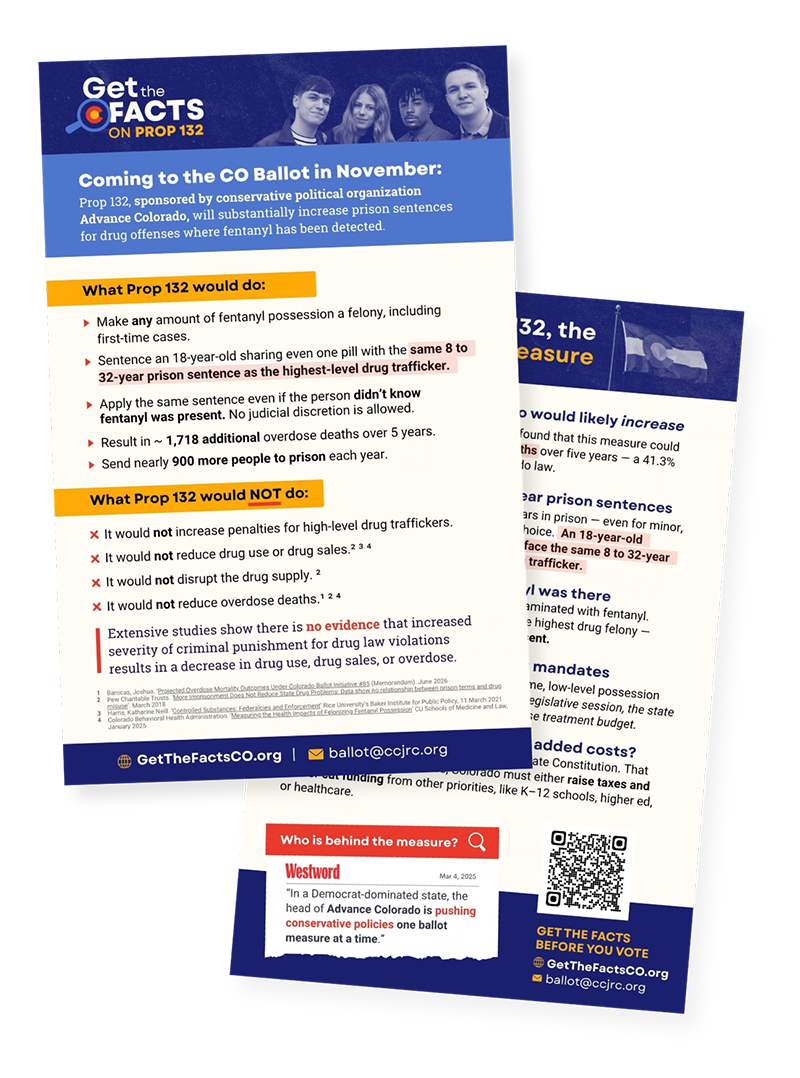
Tell your friends to
get the facts on Prop 132 before voting this fall.
Share our ‘Get the Facts’ guide to the Prop 132, the Colorado Fentanyl Ballot Measure. For more information, or to invite a speaker to your event, contact us at ballot@ccjrc.org.
SOURCES
¹ Barocas, Joshua. ‘Projected Overdose Mortality Outcomes Under Colorado Ballot Initiative #85' (Memorandum), June 2026
²The Pew Charitable Trusts. ‘More Imprisonment Does Not Reduce State Drug Problems: Data show no relationship between prison terms and drug misuse’. March 2018
³Harris, Katharine Neill. ‘Controlled Substances: Federal Policies and Enforcement’ Rice University’s Baker Institute for Public Policy, 11 March 2021
⁴Colorado Behavioral Health Administration. ‘Measuring the Health Impacts of Felonizing Fentanyl Possession’ CU School of Medicine and School of Law, January 2025
⁵Legislative Council Staff Nonpartisan Services Fiscal Impact Statement. Initiative 85: Penalties for Fentanyl Crimes, August 2025
⁶Fiscal Notes Considerations for Bills with Criminal Justice System Impacts. Memorandum, Colorado Legislative Council Staff, 30 Jan. 2026.
⁷Colorado Department of Corrections. FY24 Annual Statistical Report, 2025
The ‘Get The Facts’ Coalition:
A New PATH (Parents for Addiction Treatment & Healing), ACLU of Colorado, Advocates for Change, AFSCME Denver, Alternatives to Violence Program Colorado, Be the Epitome, Broken No More, Center for Health Progress, The Center for Employment Opportunities (CEO) Denver, Citizens Project, Colorado Black Women for Political Action (CBWPA), Cobalt, Colorado Coalition for Restorative Justice Practices, Colorado Coalition for the Homeless, Colorado Common Cause, Colorado Consortium for Prescription Drug Misuse Prevention, Colorado Consumer Health Inititiative, Colorado Criminal Defense Bar, Colorado Drug Policy Coalition, Colorado Fiscal Institute, Colorado Foundation for Universal Healthcare, Colorado Freedom Fund, Colorado Health Network, Colorado Immigrant Rights Coalition, Colorado Latino Leadership, Advocacy & Research Organization (CLLARO), Colorado Organization for Latina Opportunity and Reproductive Rights (COLOR Latina), Colorado Organizations Responding to AIDS/HIV (CORA), Colorado Providers Association (COPA), Colorado Psychiatric Society, Colorado Village Collaborative, Colorado Wins Local 1876, Colorado Working Families Party, Colorado Youth Justice, Community Economic Defense Project, Conservation Colorado, Crossroads Turning Point Inc, Crowley Foundation Inc, Denver Activist Women's Group (DAWG), Denver Democratic Socialists of America (Denver DSA), Denver Justice Project, El Movimiento Sigue, Empowerment, End Slavery Colorado, Fully Liberated Youth, Gang Rescue and Support Project, Gorman Consulting, Grief Recovery After Substance Passing, Housekeys Action Network Denver (HAND), Harm Reduction Action Center (HRAC), Hazelbrook, Hazelden Betty Ford, Healthier Colorado, High Rockies Harm Reduction, Humaniticares LLC, Indivisible Colorado, Indivisible Colorado Action Network, Indivisible Denver, Indivisible Denver Action, Interfaith Alliance of Colorado, Korey Wise Innocence Project, Krizman Law, La Plata County, League of Women Voters of Colorado, Legislation Inside, Liberty & Justice for All, LLC, Life-Line Colorado, Lighthouse Consultants Colorado, Manna-The Durango Soup Kitchen, MEAPTA Inc, Mi Familia Vota, Mile High Behavioral Healthcare, Movimiento Poder, Mutual Aid Monday, Nantli Duala & Family Support LLC, National Action Network Colorado, New Era Colorado, One Colorado, Party for Socialism and Liberation, Porch Light Health, Progress 4 All, ProgressNow, Promotores de Esperanza, Recover Simply, Redeemed Ones Jail & Prison Ministry, Inc, Restorative Justice Practice, Second Chance Center, Shorter Community AME Church, Signal Behavioral Health Network, Soul 2 Soul Sisters, Spero Justice Center, Steadman Group, Stout Street Foundation, Stout Street Recovery, Studio Harris, TeeSpark, The Bell Policy Center, The Vilomah Foundation, Vivent Health, Yarrow Collective, Young and Aspiring Americans for Social and Political Activism